
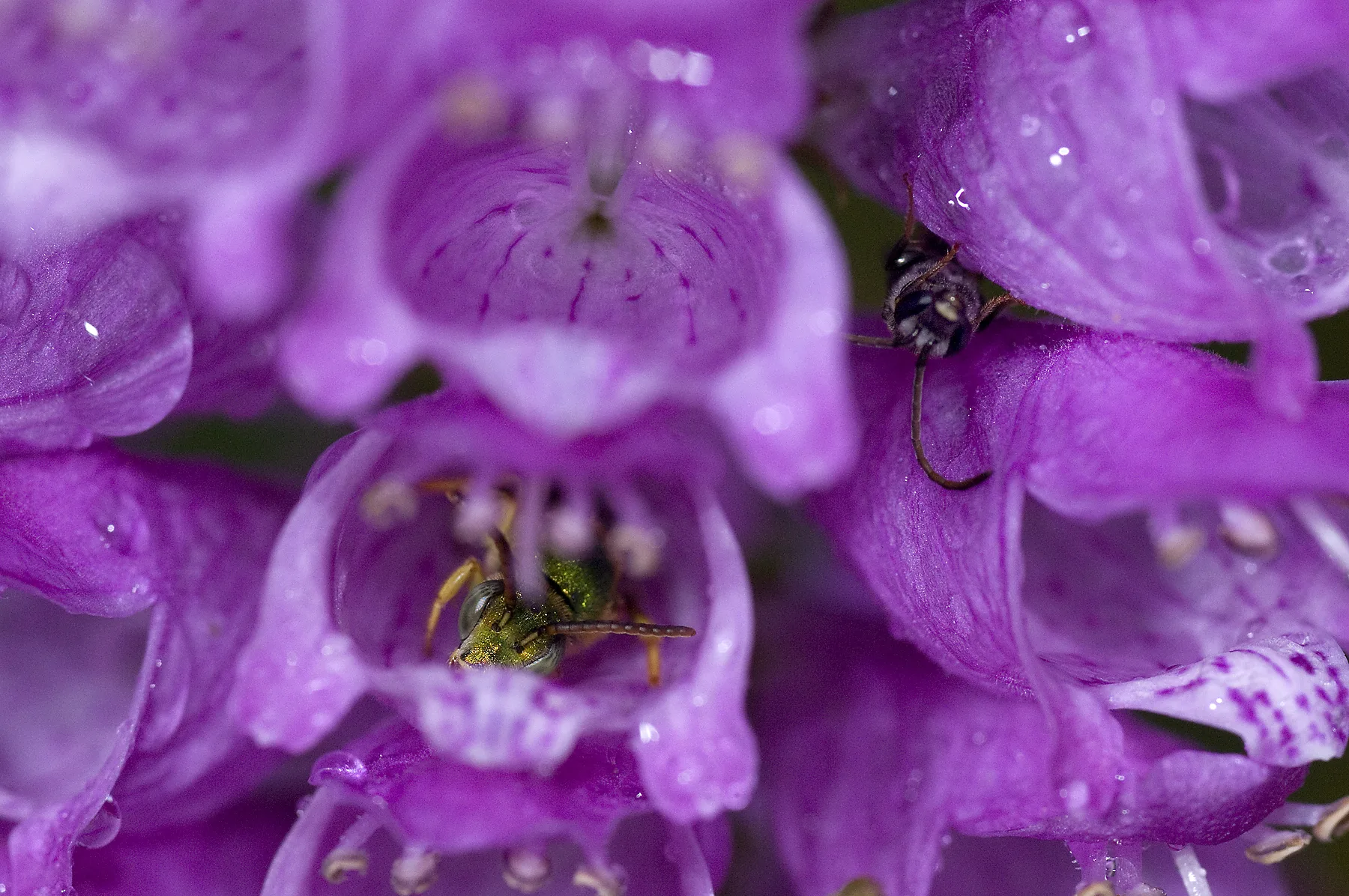

While all native plants provide ecological benefit to pollinators, through strategic plant selection you can tailor your landscaped spaces to better meet the needs of native bee species and provide a constant supply of food for these hardworking pollinators from early spring until late fall.
Things to Know Before You Grow
- While there are over 20,000 known bee species in the world, 4,000 are native to the United States. Native bees come in a range of sizes, shapes, and colors, and vary in the flowers they visit and the nests they construct.
- Ecologically, bees can be divided into two groups—long and short-tongued—based on the relative length of the mouthpart segments within their tongues that are used to gather nectar. Some long-tongued bees like Apidae (bumble and carpenter bees), favor deep flowers with a longer throat, while short-tongued bees are more limited in their floral choices.
- While some bees utilize pollen from a wide variety of plants, others are specialists, meaning they forage and use pollen from only one or two families of flowering plants.
- When selecting plants, consider adding those with bright colors, as bees are particularly drawn to blue, purple, yellow and white.
- Incorporating various foliage textures and plant types adds visual interest to your garden while also supporting different species’ needs.
Seasonal Blooms with Maximum Bee Benefit
By cultivating a bee-friendly native plant garden, you are contributing to the health of our ecosystems by supporting declining bee populations—one flower at a time! Here are a few seasonal favorites to support these important pollinators.
Spring
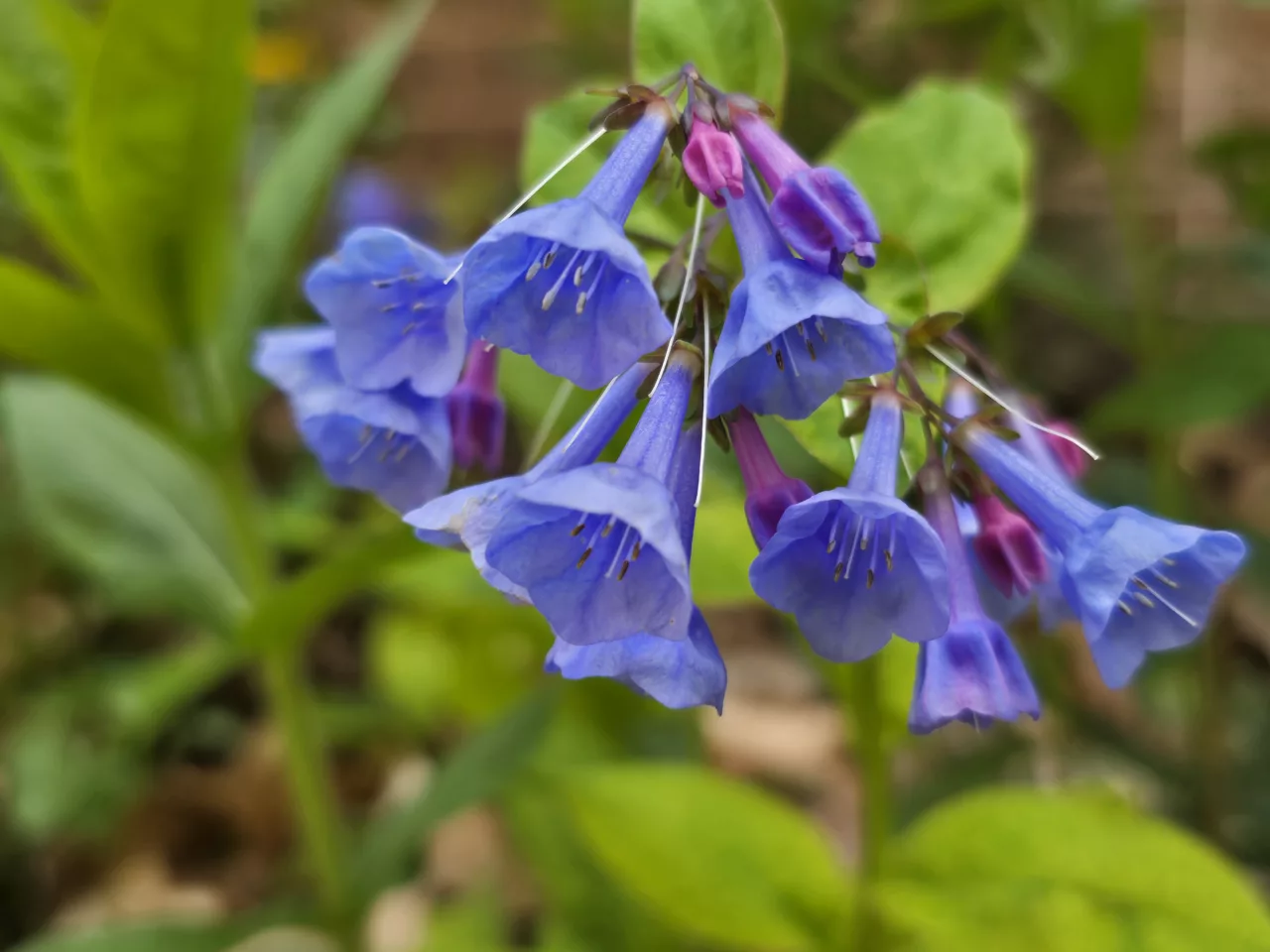
Virginia Bluebells (Mertensia virginica)
• Bloom Time: April, May
• Light Requirements: Part sun, Shade
• Soil Moisture: Moderate, Moderately Wet
• Bloom color: Blue, Pink
• Benefits these Bees: Long-tongued bees primarily, including bumblebees, Anthophorid bees (Anthophora spp., Synhalonia spp.), and mason bees (Osmia spp.)
Wild Geranium (Geranium maculatum)
• Bloom Time: April, May
• Light Requirements: Full sun, Part sun
• Soil Moisture: Moderate
• Bloom color: Pink, Purple
• Benefits these Bees: Bumblebees, mason bees (Osmia spp.), cuckoo bees (Nomada spp.), long-horned bees (Synhalonia spp.), Halictid bees (Lasioglossum spp., etc.), Andrenid bees (Andrena spp.), and other bees. Andrenid bee, Andrena distans, is a specialist pollinator (oligolege) of Wild Geranium
Eastern Redbud (Cercis canadensis)
• Bloom Time: April, May
• Light Requirements: Full sun, Part sun
• Soil Moisture: Moderate
• Bloom color: Pink, Purple
• Benefits these Bees: Bumblebees, mason bees (Osmia spp.), cuckoo bees, long-horned bees, mining bee and sweat bees.
Summer
Pale Purple Coneflower (Echinacea pallida)
• Bloom Time: June, July
• Light Requirements: Full sun, Part sun
• Soil Moisture: Dry, Moderately Dry, Moderate
• Bloom color: Purple
• Benefits these Bees: Long-tongued bees such as bumblebees, Nomadine cuckoo bees, large carpenter bees, leaf-cutting bees, short-tongued green metallic bees and other Halictine bees
Spotted Bee Balm (Monarda punctata)
• Bloom Time: July, August, September
• Light Requirements: Full sun, Part sun
• Soil Moisture: Dry, Moderately Dry
• Bloom color: Purple
• Benefits these Bees: Bumblebees, Miner bees (Melissodes spp.), and Plasterer bees (Colletes spp.)
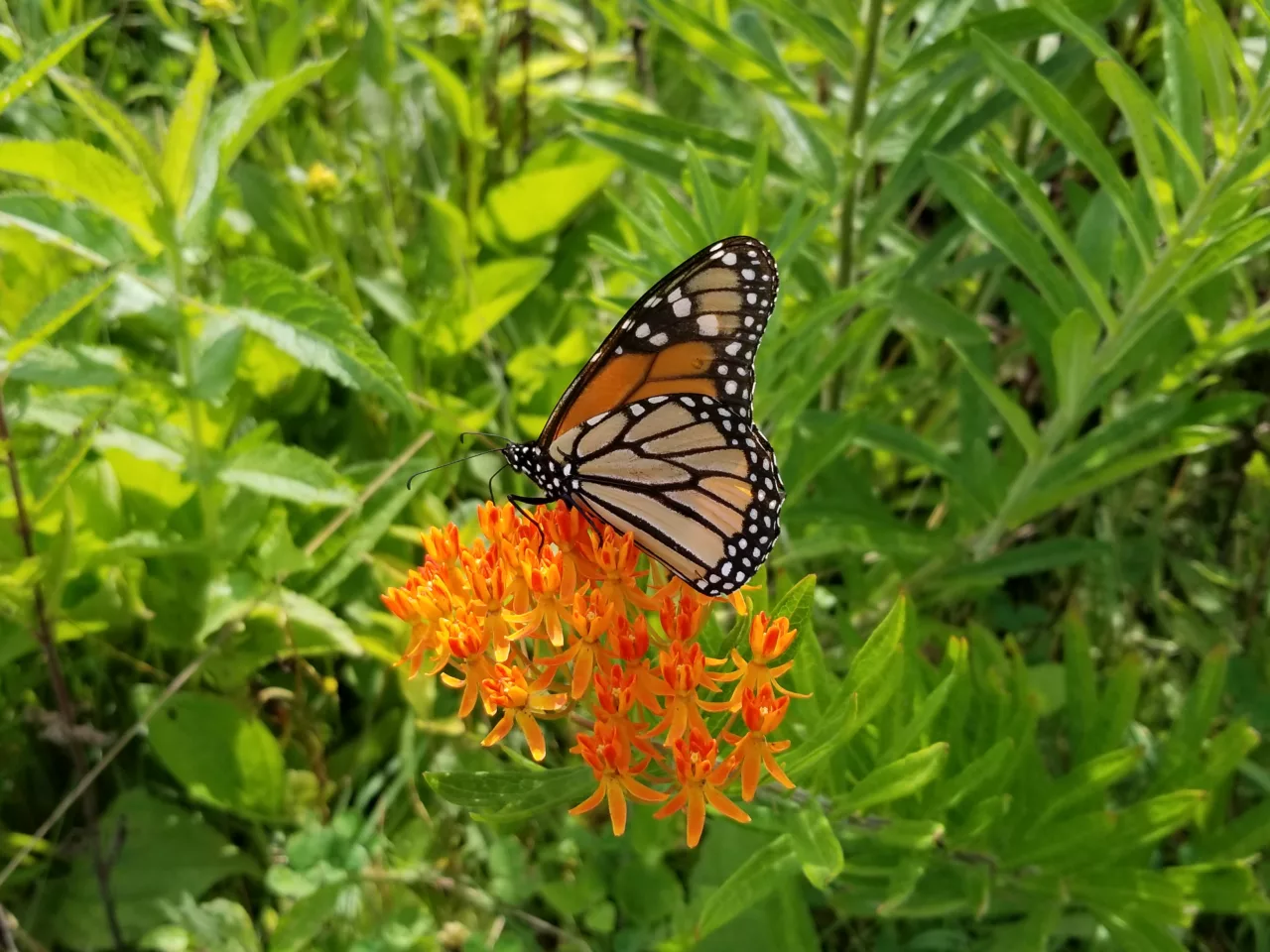
Butterfly Milkweed (Asclepias tuberosa)
• Bloom Time: June, July, August
• Light Requirements: Full sun, Part sun
• Soil Moisture: Dry, Moderately Dry, Moderate
• Bloom color: Orange, Red
• Benefits these Bees: Digger bees (Melissodes spp.), leaf-cutting bees (Megachile spp.), Halictid bees (including green metallic bees)
Highbush Blueberry (Vaccinium corymbosum)
• Bloom Time: March, April, May
• Light Requirements: Full sun, Part sun
• Soil Moisture: Moderately dry, Moderate, Moderately wet
• Bloom color: pink, white
• Benefits these Bees: Bumblebees Southeastern blueberry bees (Habropoda labriosa), large carpenter bees, cuckoo bees (Nomada spp.), plasterer bees (Colletes spp.), and Andrenid bees (Andrena spp.)
Fall
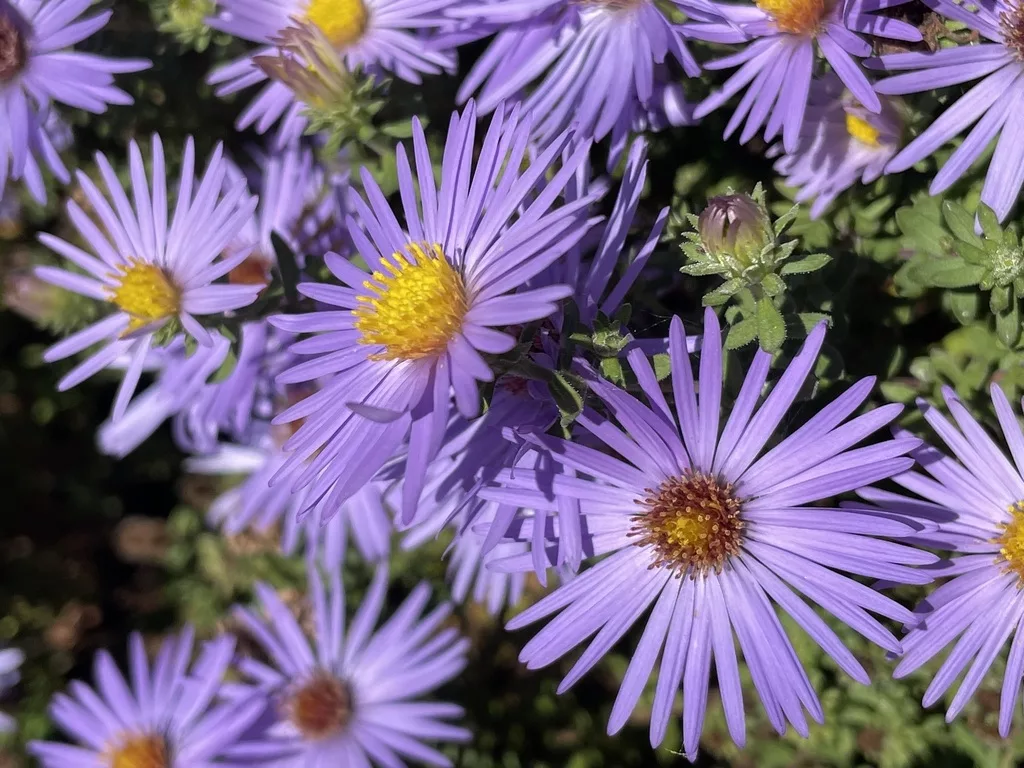
Aromatic Aster (Symphyotrichum oblongifolium)
• Bloom Time: August, September, October, November
• Light Requirements: Full sun
• Soil Moisture: Dry, Moderately Dry
• Bloom color: Purple
• Benefits these Bees: Long and short-tongued bees including bumblebees
Arrow-leaved Aster (Symphyotrichum sagittifolium)
• Bloom Time: August, September, October
• Light Requirements: Part sun
• Soil Moisture: Dry, Moderately Dry, Moderate
• Bloom color: White
• Benefits these Bees: Long-tongued bees, short-tongued bees
Showy Goldenrod (Solidago speciosa)
• Bloom Time: September, October, November
• Light Requirements: Full sun, Part sun
• Soil Moisture: Dry, Moderately Dry, Moderate
• Bloom color: Yellow
• Benefits these Bees: Primarily bumblebees
Rough-stemmed Goldenrod (Solidago rugosa)
• Bloom Time: August, September, October
• Light Requirements: Full sun, Part sun
• Soil Moisture: Moderately Wet, Wet
• Bloom color: Yellow
• Benefits these Bees: Small bees and bumblebees
Beyond the Blooms
Here are some additional ways to support these pollination powerhouses of our insect community.
- Safety in Numbers: Planting flowers in clusters makes it easier for bees to find food.
- Hydration Helps: Bees need water too. Try adding a water source or planting native plant varieties that hold water.
- Leave Some Areas Untouched: Ground-nesting bees require bare soil for nesting. Leave patches of soil uncovered or create small mounds.
- Provide Shelter: Provide winter nesting sites for solitary bees by skipping a fall cleanup. Leave hollow stemmed plants intact and some dead wood for them to access.
- Maintenance: Many bee populations have been severely reduced due to synthetic herbicide use. Remove weeds manually and choose organic mulches (such as leaves) to enrich the soil.
— Written by Julia Steiner, Public Engagement Coordinator — Conservancy Programs, Brandywine Conservancy & Museum of Art
Header photo by Mark Gormel